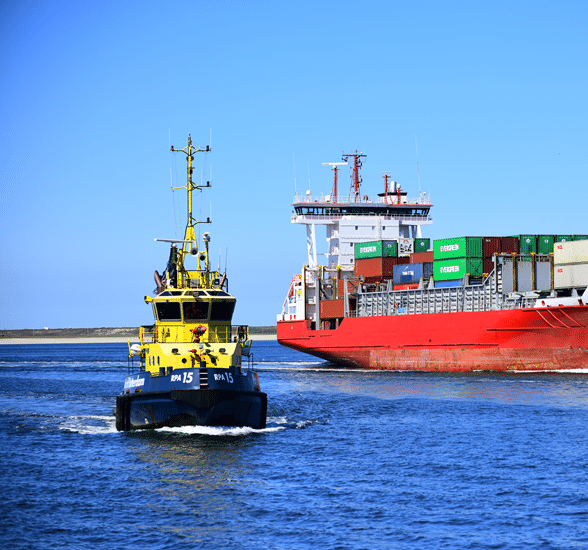
Now that the deepsea sector has been successfully connected to the Secure Chain, participation of the shortsea sector is the logical next step for the Port of Rotterdam Authority.
Strengthening the resilience of the port is a key priority for the Port Authority and considerable attention is being devoted to this in several ways. Programme Manager Subversive Crime Prevention Coen Vlagsma explains: “We support customers in becoming more resilient and we are actively investing in this together with the Port Alliance Rotterdam and the National Growth Fund / Digital Infrastructure Logistics (DIL). The Secure Chain is a prominent example of this.”
Part of a broader approach
Vlagsma continues: “We are very pleased that the Secure Chain is now actively focusing on the shortsea sector; we will gladly explain to companies why this is so significant. Drug traffickers are switching to alternative routes, for example via Africa and Southern Europe. By identifying the risks, we encourage parties to adopt safer operational practices.”
To facilitate this, the Port Authority’s contact with companies in high-risk sectors – such as shortsea – takes place via so-called Information Sharing Centres, among other things: knowledge platforms where data is exchanged and experiences are shared. “Companies may compete with one another, but in terms of security it is far better to cooperate.” Together with representatives from the Secure Chain, Portbase, Customs and the Seaport Police, the Port of Rotterdam Authority has already held three meetings with the shortsea sector. “Participation in the Secure Chain is a key theme, but other matters – such as the opportunity to engage in resilience training and insider risk scans, for example – are addressed as well.”
Strong start
Vlagsma is pleased that various shortsea parties have already decided to move forward with their connection to the Secure Chain. “Eight shipping lines are now launching a pilot and one shortsea shipping line has already gone live. This covers approximately 50% of shortsea volume. From here, we can look at how we can encourage the remaining shortsea parties to also adopt this new, safer and more reliable way of working.”